

Maximizing Returns

Explore two proven investment strategies—affordable single-family rentals and high-leverage multifamily deals—to understand their cash flow, debt paydown, and appreciation potential. EstateGather’s Maximizing Returns guide uses case studies, ROI tables, and FAQs to provide you with a clear roadmap for building lasting wealth.
In This Article
Author

Bryce Nurding
Business Owner
EstateGather
Maximizing Returns
Are you tired of settling for “just average” returns on your real estate investments? If so, get ready to think bigger and have some fun with it. In this article, we’re shining a light on two proven strategies that savvy investors use to beat the market’s usual performance. The first approach focuses on scooping up affordable single-family homes in promising areas – those modest, budget-friendly houses that can surprisingly punch above their weight in ROI. The second zooms in on high-cost market multifamily investments – think owning apartment buildings in pricey, high-demand cities where the potential payoff is huge. Both strategies have been delivering results well beyond the norm, and we’ll break down exactly how they work in an easy-to-understand way. Whether you’re a newbie or a seasoned pro, this introductory guide will show you how maximizing returns in real estate is not only possible, but easier than you might think.
KEY TAKEAWAYS
- Under-$250K Single-Family Rentals (SFR): Buying affordable 3 bed/2 bath single-family homes in top growth markets and holding for ~5–7 years can yield exceptional returns. Positive monthly cash flow, steady equity build, home appreciation, and tax write-offs combine to produce annual ROIs often 25–35% or higher, far above the ~10% average real estate ROI.
- Multifamily in Expensive Markets: Investing in 2–5+ unit multifamily properties in pricier cities (e.g. Austin, Denver, San Diego, Boston) lets you “house hack” high-cost real estate. By stacking multiple rental incomes under one roof and leveraging creative financing (like low-down-payment FHA loans), investors can offset a large mortgage and even live for free. The scale and shared costs of multifamily lead to strong cash flow and ROI potential, even in markets where single-family homes average $500K+.
- Both Strategies Beat the Market: These approaches harness multiple profit drivers – monthly cash flow, principal paydown, property appreciation, and tax benefits – to outperform typical investments. Average U.S. real estate returns are ~10% annually, but a smart single-family or multifamily strategy can triple that. The key is choosing the right property and market: Affordable homes in high-growth areas or multi-unit buildings in high-demand cities can turn modest investments into sizable returns.
- 5–7 Year Sweet Spot: A buy-and-hold period of around 5 to 7 years often maximizes ROI for these strategies. This timeline is long enough to ride up property values and pay down debt, but short enough to pivot if needed. In five years, rents can rise, mortgages shrink, and homes appreciate – yielding big gains on a relatively small upfront investment. Both case studies in this article show that by year 5, the cumulative ROI (including cash flow and equity gains) can surpass 100% of the initial cash invested.
- Fun, Flexible, and Scalable: Real estate investing doesn’t have to be boring – these strategies are both educational and enjoyable for investors. From scoping out up-and-coming neighborhoods to brainstorming how to convert a duplex garage into a rental unit, you’ll learn creative ways to boost returns. Plus, they’re scalable: you can rinse and repeat with more houses or use one multifamily as a springboard to larger investments. It’s a rewarding way to build wealth while providing quality housing and having some fun along the journey!
Sponsor
YOUR
ADVERTISEMENT
HERE
Just $20 a Month, for full site coverage.

Single-Family Rental Strategy
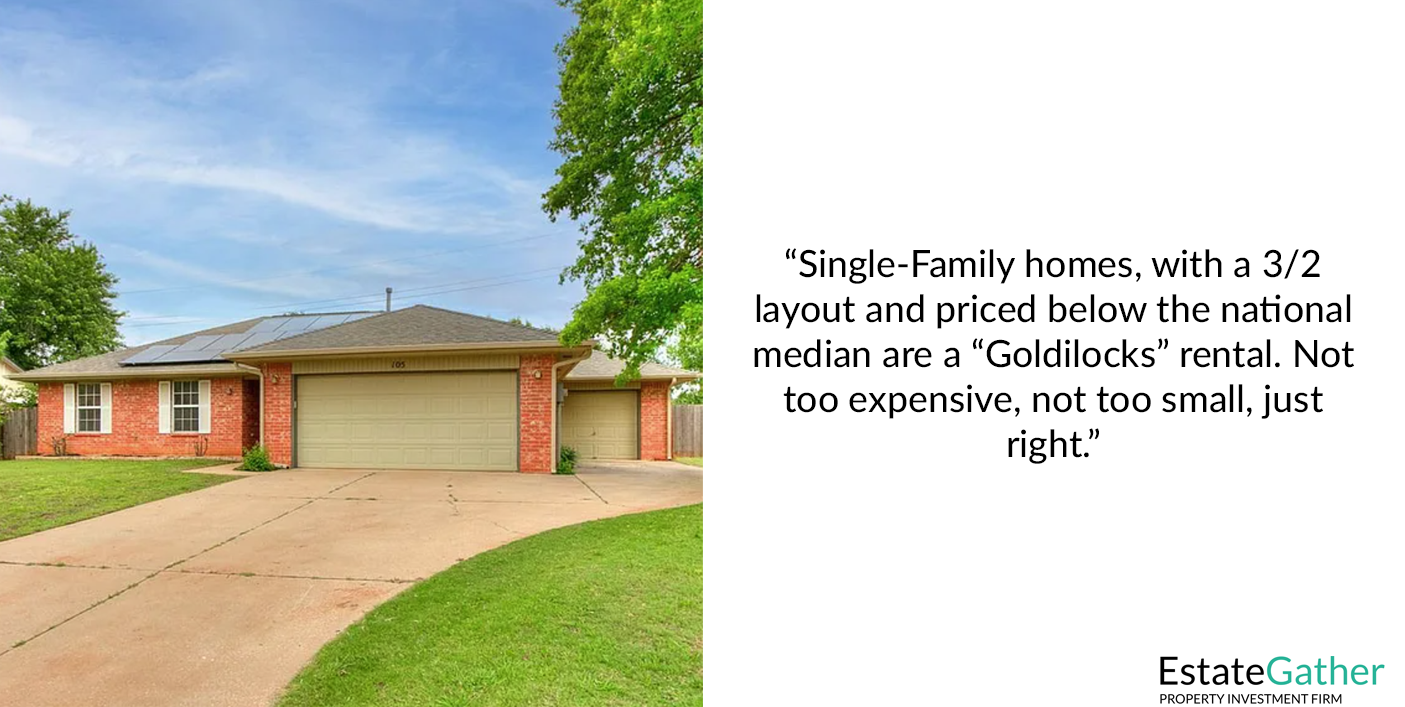
For investors just starting out (or anyone seeking strong returns without a huge budget), buying affordable single-family rentals is a tried-and-true strategy. This approach focuses on below-median-priced homes – typically under $250,000 – in markets with solid growth prospects. A 3-bedroom, 2-bath house is often the sweet spot: it’s the kind of home that attracts reliable long-term tenants (like families) and also appeals to future first-time buyers if you sell. In fact, single-family rentals (SFRs) have become the fastest-growing segment of the U.S. housing market, as many people choose to rent homes instead of buy. The demand is high, and you as an investor can capitalize on it.
Why < $250K and 3 bed/2 bath? Homes priced below the national median (around $300K–$400K in recent years) tend to offer better rent-to-price ratios, making it easier to get positive monthly cash flow. In affordable cities, rents are high relative to purchase price, so you can cover expenses and still have money left over each month – an immediate return on your investment. A 3/2 layout is ideal because it’s standard housing stock for families and very liquid. There’s a large buyer pool if you decide to resell (both investors and regular homebuyers want 3/2 homes), which helps reduce your risk. And while you hold it, a 3-bedroom house can command more rent than a smaller condo or apartment, but without the complexity of multi-unit management. It’s the “Goldilocks” rental: not too expensive, not too small – just right.
The 5–7 Year Game Plan: This strategy isn’t about flipping for a quick buck; it’s about a moderately short buy-and-hold period that lets you capture multiple sources of profit. Here’s how it typically works:
- Buy below market in a growth area. Look for houses in cities or suburbs with strong job and population growth, but where home prices are still relatively low. For example, markets in the Southeast and Midwest like Birmingham, AL (median ~$230K) or certain Florida suburbs offer great affordability and upside. If you can snag a property under $250K in a growing market, you’re setting yourself up for success.
PRO TIP: Often these are not in your own backyard – many top performing affordable markets are out-of-state. (That’s okay! A lot of investors buy remotely with a good property manager.)
- Ensure positive cash flow from day one. Cash flow is king in rental investing. This means your rental income should exceed your expenses (mortgage, taxes, insurance, maintenance). For instance, suppose you buy a house for $200,000 with a 20% down payment (~$40K). If the monthly rent is $1,600 and your mortgage payment is $1,000, you have a $600/month gross cushion. After setting aside money for insurance, property management, and maintenance, you might net about $200/month in positive cash flow – that’s $2,400/year in your pocket (approximately a 4–5% cash-on-cash return on your $50K total investment after closing costs). Having net positive income makes the investment self-sustaining and low-stress; the rent basically pays for the property and then some.
- Leverage all four ROI drivers: What truly turbocharges returns is that cash flow is just one part of your ROI. With a buy-and-hold rental, you’re also gaining equity each month as the tenant pays down your mortgage principal (think of it as a hidden savings account growing). This “principal paydown ROI” often adds ~5% return on your cash each year in the early years. Next, you have depreciation and tax benefits, which can save you money at tax time – the IRS lets you deduct paper “losses” (depreciation) even when you’re actually making money, boosting your effective return by a few percent. And of course, appreciation – the home’s value rising over time – tends to be the biggest factor. In a good market, home values might rise ~5% a year (sometimes more). On a $200K house, that’s +$10K/year in equity gained on top of what your tenants pay down. When you add it all up, the total annual ROI can easily hit 25–30% or more by the end of year 5.
- Aim for ~5 years, then reassess: By year 5, a lot has happened – you’ve built up equity, likely seen significant appreciation, and enjoyed cash income. At this point, many investors re-evaluate: Should you sell and reinvest the gains elsewhere? Or perhaps do a 1031 exchange (a tax-deferred swap into another property) to keep growing the portfolio? Or you might hold longer if the property is still performing well. There’s no rigid rule, but 5–7 years often strikes a great balance between realizing gains and avoiding diminishing returns or the need for major renovation that comes with very long holds. It’s short enough that you get your profit relatively fast (compared to a 30-year hold), but long enough to ride out any short-term market dips and let appreciation work its magic.
So what does this look like in real life? Let’s check out the Single-Family Home Case Study, a real example of this strategy in action, where an investor achieved over 30% annual returns on an entry-level rental home.
Case Study: Single-Family Home
Meet “Investor Alice.” A couple years ago, Alice purchased a single-family home in Poinciana, Florida – a suburb of Orlando known for affordable housing and rapid growth. The property was a 3 bed, 2 bath house built in 2017, sitting in a nice family neighborhood. Here’s the rundown of her investment:
- Purchase Price: $195,000
- Upfront Investment: She put 20% down ($39,000) and paid about $7,800 in closing costs, plus ~$7,195 in light renovations. Total cash invested: ~$54,000.
- Financing: Alice got a 30-year fixed mortgage at 3.75% interest (this was before rates rose). Her monthly principal & interest came to about $722. Adding property taxes ($233/month) and insurance (~$50), her total PITI (mortgage + escrow) was ~$1,005 per month.
- Rental Income: The home was rented out for $1,475 per month to a local family. (This area has strong rental demand, so finding a tenant was quick.) The property management fee was 8%, and Alice also budgeted about 8% for vacancy/repairs each month, which is wise for estimating realistic cash flow.
Now, let’s see how the returns stacked up:
- Monthly Cash Flow: Roughly, the rent ($1,475) minus PITI ($1,005) gives $470/month of gross cash flow. After setting aside ~16% ($236) for management and vacancy/repairs, the net cash flow was about $234/month. That’s $2,800/year of spendable cash. Importantly, it was net positive from day one – the tenants’ rent not only covered all expenses, but left an extra ~$234 in Alice’s pocket each month. (Net cash flow ROI: about 5% of her $54K investment.)
- Equity Buildup (Principal Paydown): Each month, part of the $722 mortgage payment went toward paying down the loan principal (not just interest). In the first year, roughly $2,500–3,000 of the loan balance was paid off using the tenant’s rent. That’s value Alice gains if she sold the house or refinanced. We can call this a “principal reduction ROI” of ~5% annually on her $54K investment. It’s like forced savings – every rent check makes her a bit wealthier by reducing debt.
- Appreciation: This central Florida market was appreciating about 5–8% per year. Let’s assume a conservative 5% annual rise in value. By the end of year one, the $195K house might be worth about $204K (a $9,750 gain). By year 5, if that trend continued, the home could be worth ~$250K or more. Alice actually saw quicker growth early on – in the first two years, Orlando’s market jumped and her property went up about 8% annually, then around 6% in years 3–5. Bottom line: appreciation added roughly $10K+ per year to her net worth, without her lifting a finger. Over five years the property value increased by around 28%, a huge contributor to ROI.
- Tax Benefits: Being a rental, the property also provided tax write-offs. Alice could depreciate the house (not the land) over 27.5 years, which came out to around a $7,000 depreciation deduction annually. This paper loss, along with write-offs for interest, taxes, and expenses, meant most or all of her $2,800 cash flow was tax-free. In fact, on paper the property might even show a small loss, which could offset other income. The tax savings effectively added maybe $1,000–$2,000 to her yearly bottom line (equivalent to a few extra percentage points of ROI). Bonus: When Alice decides to sell, she can use a 1031 Exchange to defer capital gains taxes by rolling into another property, further maximizing her take-home return.
Now drumroll… the total ROI. By the end of year 5, Alice’s overall return picture looked like this (roughly):
- Annual Cash Flow: ~$2,800 (after expenses)
- Annual Principal Paid Down: ~$2,500 (early years a bit less, later a bit more as each payment shifts more to principal)
- Annual Appreciation: ~$10,000 (5% of $200K, averaged)
- Annual Tax Savings: ~$1,500 (various deductions value)
Adding these up, that’s about $16,800 of “profit” per year in combined benefits. Against her ~$54,000 investment, this equates to roughly 31% annual ROI. This easily tripled what a typical real estate investor might make (Forbes reports ~10% is a common annual ROI). It even beat the stock market’s historical ~10% average by a wide margin. Not too shabby for a beginner-friendly single-family rental!
Importantly, the strategy delivered because all the pieces clicked: She bought below the median price in a fast-growing location (Orlando area), ensured positive cash flow from day one, and held on long enough to reap appreciation and debt paydown rewards. Plus, being a 3/2 home, it was easy to manage and had low vacancy (her tenants stayed multiple years). And when the time came, the property was easy to sell – single-family homes have a broad resale market, so she had multiple exit options to lock in her gains.
This case study highlights why the entry-level SFR strategy is so powerful. You don’t need millions to invest; just one well-chosen house can significantly outperform many other investments. But what if you live in or want to invest in a high-cost city, where $200K won’t buy a tool shed? That’s where the Multi-Family Rental Strategy comes in – turning the tables on expensive markets by using multifamily properties for maximum ROI.
Sponsor
YOUR
ADVERTISEMENT
HERE
Just $20 a Month, for full site coverage.
Multifamily Rental Strategy
Not all real estate deals are in cheap markets – and they don’t have to be. There’s a way to score outstanding returns even in places where home prices are sky-high: invest in small multifamily properties (duplexes, triplexes, fourplexes, or even small apartment buildings) and use creative financing and living arrangements to make the numbers work. This strategy is perfect for markets like Austin, Denver, San Diego, or Boston, where a single-family home might cost $500K, $800K, $1M+, putting traditional rentals out of reach for many investors. By purchasing a 2–4 unit property, you can “stack” rental income from multiple tenants and leverage economies of scale to offset the high purchase price. Essentially, more units = more rent = more ROI potential.
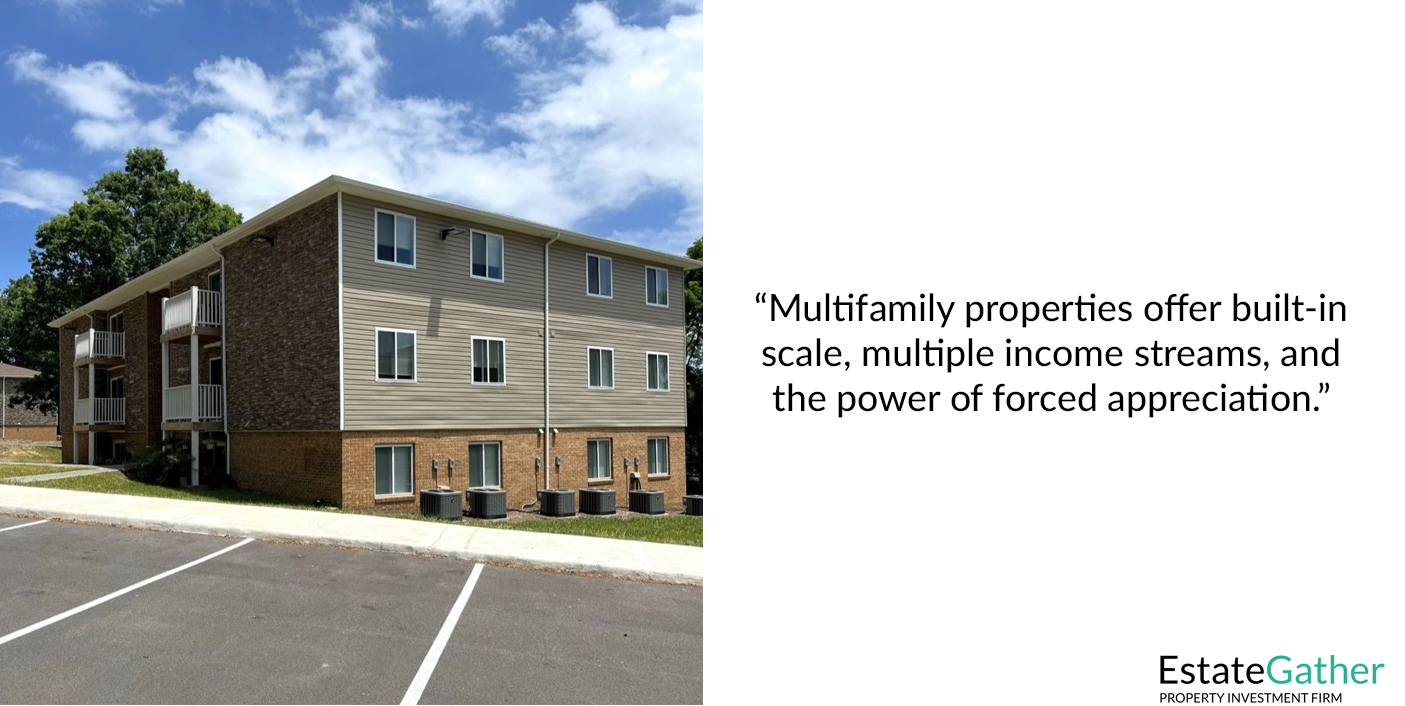
Here’s why multifamily investing in expensive areas can still deliver strong returns:
- Scale and Shared Infrastructure: With multifamily, you can scale up faster and more efficiently. Owning one building with 4 units is often easier and cheaper to manage than 4 separate houses. All your units are under one roof – literally. Fix one roof or one heating system, and you’ve improved 4 units at once. This economies of scale means lower cost per unit on repairs and maintenance. Insurance is usually cheaper per unit as well, and property management firms often charge a lower percentage for multifamily (around 4–7% of rents) versus ~10% for single-family homes. The net effect is higher profitability: you keep more of the rent as profit compared to if those units were all spread out in different locations. It’s one reason multifamily properties generally provide higher returns and better cash flow – multiple income streams and shared costs make for greater efficiency.
- High Rents in High-Cost Areas: In expensive cities, rents are also high. So while the purchase price is steep, the rental income per unit is generally much larger than in a cheaper market. For instance, two 2-bedroom units in San Diego might each rent for $2,500 – $3,000 per month. That’s $5–6K gross monthly rent from one duplex. It can support a big mortgage, especially if you as the owner live in one unit (more on that shortly). Strong rental demand in these cities (often fueled by constant inflow of young professionals, students, etc.) also means you can push rents up over time. Many hot cities have sub-5% vacancy rates and fast-rising rents, so your income is likely to grow each year.
- Forced Appreciation (Value Add Potential): Here’s a cool trick: multifamily properties (of 5+ units, and even 2–4 units to some extent) are often valued based on their income, not just comps. If you increase the NOI (Net Operating Income) of the property, you increase its market value. This could be through raising rents, adding coin laundry, renovating to charge more, or cutting expenses. Even a small improvement in operations can significantly boost the property’s appraised value. For example, if you renovate units and can charge an extra $200 per month per unit, that’s additional income which makes the building more valuable to an investor. It’s like flipping, but via increased rent rather than just hoping the market rises. Single-family homes don’t have this advantage – they mostly value on comparable sales, which you as an owner have little control over. Multifamily gives you agency to force equity growth, a powerful way to outpace market appreciation.
- Creative Financing & House Hacking: Perhaps the biggest advantage for high-cost markets is the ability to use owner-occupied financing on small multi-family properties. If you live in one of the units, you can qualify for FHA loans with as little as 3.5% down (for 2-4 unit properties) – a game changer! Instead of needing 25% down on a $800,000 fourplex (which would be $200K, ouch), you could potentially put just 3.5% ($28K) or 5% down. This lowers the upfront barrier dramatically. Living on-site, often called house hacking, also means you can use your rental income to help qualify for the loan (the bank knows you’ll receive rent from the other units). With an FHA or similar owner-occupant loan, interest rates are typically better too, which improves cash flow.
Now, why would you want to live in your investment? Because house hacking can nearly eliminate your housing expense, which is most people’s biggest bill! If you occupy one unit, your tenants’ rent can pay the majority of the mortgage. In some cases, you might live for free or even get paid to live there. For example, one investor used an FHA loan to buy a $400,000 fourplex with just ~$14,000 down. Each of the 3 rental units brought in $1,200/month, for $3,600 total. His mortgage was about $2,000/month. After all expenses, he was over $1,000 positive per month and living in one unit for free! That’s an extreme case, but even on a duplex in a pricey city, you might rent one unit for, say, $3,000 and have a $4,000 mortgage. You’d only be paying $1,000 out-of-pocket to live in a home that would normally cost $4K/month – that’s $3K of effective “income” or savings. Your ROI skyrockets because you invested a small down payment and gained a huge benefit (free housing = money saved). Many house hackers also get creative: you can rent out spare bedrooms in your unit, Airbnb a basement or even “rent out the garage” in some way. The goal is to maximize income so the property covers itself completely.
- Entry into Otherwise Impossible Markets: Multifamily can be your ticket into ownership in a city that you might otherwise only be able to rent in. Central Austin’s home prices now exceed $500K, which prices many people out of buying. But, a small multifamily near downtown can be more attainable if the rents help pay for it. In Austin’s case, the rental vacancy is under 5% and rents have exploded, so owning a fourplex or even a duplex there means you’re riding a wave of high rental demand. Young professionals need places to live, and they’re often renters in these cities. By providing a small apartment building or duplex, you tap into that demand and essentially have built-in clientele. And when you’re ready to move out of the owner’s unit, you can rent that one too for even more income, or rinse and repeat by house hacking another property.
In short, the high-cost market strategy turns the problem of expensive homes on its head by dividing one expensive property into multiple affordable units. Each tenant contributes to the mortgage, so you aren’t shouldering it alone. The ROI from such deals can be phenomenal, as we’ll see next.
Before moving on, it’s worth noting one more avenue: Real Estate Syndications. If buying a multifamily property solo in a pricey area is still out of reach, investors can pool funds via syndications or partnerships to acquire larger apartment buildings. This is a more passive approach (you might be a limited partner while an experienced sponsor handles the work), but it allows you to own a slice of high-end real estate (like a 50-unit complex in San Diego, for example) and enjoy proportional returns. Syndications often target IRRs in the 15–20% range over several years, using similar principles (rental income, value-add, appreciation). So, even if house hacking isn’t your thing, you can still get in on multifamily in expensive markets through group investments.
Now, let’s look at a Multifamily Property Case Study, which illustrates how a savvy investor applied the multifamily strategy in a high-cost city and reaped big rewards.
Case Study: Multifamily Property
Meet “Investor Bob.” Bob is a young professional in Denver, Colorado – a city where home prices have soared, making it tough to buy a single-family home on a modest budget. Instead of buying a condo for himself, Bob decided to house hack a duplex in an up-and-coming Denver neighborhood.
- Property: Up/Down duplex (2 units: each 2 bed/1 bath). It wasn’t cheap – Purchase Price: $550,000 – but that’s actually below Denver’s median for a duplex in that area (a reflection that it needed a little TLC).
- Financing: Bob used a 5% down conventional loan for owner-occupants (since he had good credit, he opted for conventional over FHA to avoid some FHA fees). He put down $27,500 and paid about $10K in closing costs – roughly $37,500 total cash into the deal. The interest rate was ~5% (he locked this in 2021 before rates climbed). His monthly mortgage (P&I) ended up around $2,800. With taxes and insurance, the total payment (PITI) was ~$3,300/month.
- Living Setup: Bob moved into the ground floor unit and rented out the upper unit. The upstairs 2BR unit fetched $1,900/month in rent (Denver has strong rents due to all the young renters flocking to the city). To further boost his income, Bob didn’t let the spare room in his unit sit idle – he got a roommate for his second bedroom who paid $800/month. Essentially, he was living with a roommate, but in his own property (the roommate felt like just another tenant). Between the upstairs rent and the roommate contribution, Bob collected $2,700/month.
- Monthly Cash Flow: With $2,700 coming in and a $3,300 mortgage, you’d think he’d still be paying $600 out of pocket – but Bob got a bit creative. A portion of his own unit’s living room was converted into a small Airbnb space (just as an experiment). He used a room divider to section off a sleeping area and listed it on Airbnb for travelers, while he himself slept behind the divider. It sounds crazy, but it worked – he brought in an extra ~$500/month on average from short-term guests. This, combined with careful budgeting on utilities, meant Bob was effectively living for (nearly) free. All in, his property’s income covered the mortgage and then some – about $3,200 in income vs. $3,300 in costs, a negligible difference. For practical purposes, we’ll call that break-even cash flow in year one (any small shortfall was offset by him not paying rent elsewhere).
- First-Year ROI: Here’s where it gets exciting. Even with essentially zero net cash flow, Bob’s returns were massive because of the other benefits:
- Housing Cost Savings: If Bob had rented a comparable 2BR apartment in Denver, it would cost around $1,800/month. By house hacking, he eliminated that expense – effectively saving $21,600 in a year that would have been spent on rent (or on a mortgage without rental income). That’s real money in his pocket (though in ROI calculations we don’t always count “saved rent” as income, it absolutely improves his finances).
- Rental Income Profit: He did achieve a small surplus after tweaking his Airbnb setup – let’s call it ~$100/month net positive. So maybe +$1,200 in cash for the year.
- Loan Principal Paydown: On a $522,500 loan (550K minus down payment), at 5% interest in year one he paid down roughly $7,250 of principal. That’s equity he gained.
- Appreciation: Denver’s market has been hot; even a modest year saw ~4% appreciation. His $550K duplex might be worth about $572K after one year (an unrealized gain of +$22,000).
- Tax Benefits: Depreciation on a ~$500K building (excluding land) could be ~$18K/year in deductions. After expenses, Bob showed a tax loss, meaning his roommate and rent income were basically tax-free (a tax savings equivalent to a couple grand).
If we tally just the tangible gains in year one: $7,250 (principal) + $1,200 (cash) + say $2,000 (tax saved) = ~$10,450. Now, Bob’s initial investment was ~$37,500. So even ignoring appreciation, he saw about a 28% return on his money in pure cash+equity/tax benefits. But it doesn’t stop there – factor in the $21,600 in rent he didn’t have to pay because he lived in his own duplex, and it’s arguable his personal finances were better off by over $32K that year compared to not doing this. That’s effectively an 85% return on his $37.5K! In more conventional ROI terms, including the property’s appreciation of ~$22K, Bob’s net worth jump on paper was huge – nearly $32,500 gained (cash flow + equity + appreciation) against $37.5K invested, or about 87% ROI in one year.
- Longer Term Play: Bob isn’t planning to sell after one year; he’s holding for the long run. With each year, the returns should normalize to a still-excellent level. He can raise the upstairs unit’s rent by ~5% annually (the Denver rental market supports increases). He may not want to Airbnb forever, but even without it, once he eventually moves out, he can rent his unit for market rate (another ~$1,900 or more). At that point the duplex would likely bring in ~$3,800+ monthly. If his mortgage is still ~$3,300, he’d pocket $500+ a month in cash flow. Meanwhile, the loan keeps getting paid down and the property value likely keeps rising. Over 5–7 years, Bob could easily see a 20%+ annual ROI on average, even as the early “wow factors” level out. When ready, he can refinance to pull out equity for another property, or sell for a profit (perhaps via 1031 exchange to avoid taxes, rolling into a fourplex or small apartment building).
This case demonstrates how a multifamily strategy in a high-cost city can outperform almost anything else. By using an owner-occupant loan and being creative with rentals, Bob turned an expensive Denver property into a cash-generating asset – essentially living for free while building equity. It’s a win-win: he provided rental housing in a tight market (his tenants love the location by the park), and he’s growing his wealth at a staggering rate. As a bonus, he got to enjoy living in a vibrant area he might otherwise have been priced out of.
Now, not every multifamily house hack will be as dramatic as Bob’s (82% ROI is exceptional and involved some hustle, like hosting Airbnb guests). But even a more typical scenario – say a duplex in a pricey city where you break even on living costs – can yield 15–25% annual returns when you count equity build and appreciation. And that handily beats the stock market or the average landlording returns. The key is finding a property where the numbers work: usually that means 2–4 units, in a location with high rents, and using a low down payment loan to maximize leverage.
To cement our understanding, let’s put the two strategies side by side in a comparison table, and then we’ll tackle some Frequently Asked Questions that often come up about these approaches.
Sponsor
YOUR
ADVERTISEMENT
HERE
Just $20 a Month, for full site coverage.
ROI Comparison Table
Let’s compare how the two strategies stack up on key metrics and returns:
| Aspect | Single-Family Rental Strategy |
|---|---|
| Purchase Price: | ~$150K – $250K (e.g. Midwestern or Sunbelt city) |
| Unit Count: | 1 unit (single tenant/family) |
| Down Payment: | ~20% conventional (≈ $30K–$50K on a ~$200K house) *(Could use 0–5% with special programs/Veteran loans) |
| Monthly Cash Flow: | Typically positive ($200+ net/mo if bought right) Rent usually covers mortgage and expenses with some cushion. |
| Vacancy Impact: | High impact – if the one tenant leaves, 0% of rent coming in until re-filled. |
| Value Appreciation: | Tied to local housing market comps. In growing affordable cities, can see strong % gains (e.g. 5–10%/yr in hot markets). |
| ROI Components: | 1) Net Rent Cash Flow (often 5–10%/yr on investment) 2) Equity build via loan paydown (~5%/yr) 3) Home Appreciation (varies, often 4–8%/yr home value increase) 4) Landlord Tax Benefits (depreciation, etc. ~2–4%/yr effective) Typical total ROI: ~25–30% annually by year 5. |
| Ideal Investor Profile: | First-timers, budget-conscious investors, those seeking simpler management. Only need to manage one tenant/house at a time. Lower absolute dollars at risk. |
| Exit Strategy: | Sell to another investor or to an owner-occupier family (large buyer pool). Or keep as a long-term rental for continued cash flow. |
| Aspect | Multifamily Rental Strategy |
|---|---|
| Purchase Price: | ~$500K – $800K total (e.g. duplex/triplex in expensive city) |
| Unit Count: | 2–4 units (multiple tenants) |
| Down Payment: | Owner-Occupied: 3.5%–5% (FHA/low-down) – e.g. ~$25K on $700K. Investor (no live-in): ~25% conventional – e.g. $175K on $700K. |
| Monthly Cash Flow: | House Hacking: Owner’s unit greatly reduces or eliminates housing cost. Fully Rented: Typically positive if bought right. |
| Vacancy Impact: | Low impact – e.g. one vacant unit in a fourplex = only ~25% income loss. |
| Value Appreciation: | Tied to both market and income. High-demand cities can appreciate well. Plus, investor can force value through upgrades. |
| ROI Components: | 1) Net Rent Cash Flow (often 5–10%/yr on investment) 2) Equity build via loan paydown (~5%/yr) 3) Forced Appreciation Potential (value grows as NOI grows) 4) Landlord Tax Benefits (depreciation, etc. ~2–4%/yr effective) Typical total ROI: ~25–30% annually by year 5. Higher with house-hacking. |
| Ideal Investor Profile: | Investors in high-cost areas, or those wanting to maximize returns via leverage. More active management (multiple tenants) but higher reward ceiling. |
| Exit Strategy: | Keep as rental (often good long-term hold). Or sell to another investor (larger multifamily may require finding an experienced buyer). |
Frequently Asked Questions (FAQ)
These ROI numbers sound high – are they realistic? What’s the catch?
It’s true, returns like 25–30% (or higher) annually are unusually strong compared to traditional investments. They’re achievable because these strategies harness leverage and multiple profit centers. The “catch,” if any, is that it’s not passive magic – you have to buy smart and manage smart. High ROI comes from value-add effort (like finding the right market, ensuring positive cash flow, maintaining the property, etc.). For example, not every $200K house will automatically yield 30% – you need one in a growing market with good rent and a solid deal (below retail price if possible). Likewise, house hacking might mean sacrificing a bit of privacy (having tenants or roommates) in exchange for huge financial gain. The strategies work best when you treat your investing like a business: do your due diligence, run the numbers (EstateGather’s free calculators can help here), and stay involved. Also remember, real estate returns compound with time – the first year might be lower ROI and later years higher as rents rise and debts drop. The examples we gave (33% ROI SFR, 82% ROI hack) assume a well-executed plan in a favorable market cycle. Many investors are consistently seeing ~20%+ with these approaches, which is still double the average. And if the market cools or values dip temporarily, a cash-flowing property gives you the flexibility to hold until things improve. In short: The numbers are realistic if you buy right and manage well, but they’re not “free money” – you earn them by being an informed investor (which, since you’re reading this, you’re on the right track!).
Why specifically a 3 bed/2 bath single-family home under $250K for the single-family rental strategy?
The 3-bed/2-bath home is a sweet spot for several reasons. First, tenant appeal: families, couples, roommates – almost every renter demographic can make use of a 3/2, so it’s easy to fill and generally yields solid rent. Smaller 2-bed or 1-bed houses limit your tenant pool; larger 4+ bed houses might be expensive and attract more wear-and-tear (e.g. too many people under one roof). Second, resale value: a 3/2 is the classic starter home in America. This means when you go to sell, you have two audiences — other investors and ordinary homebuyers looking to move in. That larger buyer pool makes sale easier and often more profitable. An owner-occupant might pay top dollar for your nicely appreciated 3/2 house, whereas investor-only properties (like a 5-unit apartment building) have a smaller set of buyers.
Under $250K is mentioned because it typically indicates you’re buying below median value, which often correlates with better rental returns (higher yield). Also, lower price = lower down payment and loan, which makes it more accessible for a new investor. You want a property that “pencils out” – and many experienced investors find that median or above-median priced homes rarely cash flow as well. A $500K single-family might only rent for $2,500 (0.5% of price per month), whereas a $200K home might rent for $1,600 (0.8% of price). The cheaper property is closer to that 1% rule of thumb for rent-to-value, thus more likely to generate positive cash flow. Finally, affordable 3/2 homes tend to be in working-class neighborhoods with stable rental demand. They also cost less to insure and have lower property taxes in absolute terms, further helping your ROI. So it’s a Goldilocks formula: the home is large enough to be desirable, but not so pricey as to kill your returns.
How do I identify top-performing affordable markets for the single-family rental strategy?
Look for cities or regions with a combo of growth and affordability. Key indicators: job growth, population inflow, and a median home price under (or not far above) $250K. Often these are in the Southeast, Midwest, or pockets of the Southwest. Recent examples (as of 2024–2025) include Birmingham, AL (booming with tech and healthcare jobs, median ~$230K), the Greater Orlando area (lots of population growth but still some suburbs under $300K), parts of Texas outside the major metros, mid-size cities in the Midwest like Columbus, OH (steady growth, median ~$275K) or Indianapolis, IN (strong rental yields around 7–8%). Look at lists of “best cash flow markets” or “fastest-growing cities with affordable housing.” EstateGather’s Target Markets page highlights states like Florida and Oklahoma – Florida for growth, Oklahoma for lower prices with stable rents. The ideal target market has:
- Economic Growth: new employers, diversified industries (so jobs are being created).
- Population Growth: people moving in, not out, which boosts housing demand.
- High Rental Yields: purchase prices low relative to rents. For instance, if median rent for a 3/2 is $1,500 and median home price is $180K, that’s a good sign.
- Landlord-Friendly Environment: states with fair or lenient rental regulations, low property taxes, etc., can be a plus (e.g. many Sunbelt states).
- Future Development: any upcoming infrastructure, schools, or revitalization projects that could fuel appreciation.
If your hometown isn’t on that list (maybe you live in a coastal high-price city), don’t be afraid to invest out-of-state. Many successful investors remotely own rentals across the country. Just be sure to build a good local team (agent, property manager, contractor). The effort to learn a new market can really pay off when you land in one of the top markets, rather than settling for a mediocre local deal. And remember, affordable markets often have less volatile cycles – your cash flow buffers you during any downturns, so you can just collect rent and wait for the next upswing.
What if I live in a high-cost city – which strategy should I try?
This depends on your comfort level and resources. If you live in a high-cost city (say San Francisco, NYC, Seattle), buying a local single-family rental that cash flows is incredibly difficult – prices are just too high relative to rents. In those cases, multifamily properties might be your only viable local option, because the extra rents from multiple units are needed to cover the big mortgage. House hacking your residence is a great way to get started in an expensive city. For instance, many folks in L.A. buy a duplex, live in one unit and rent the other – it’s often the only way to afford property there, but it sets them on the property ladder. However, you could also do purchase single-family homes remotely. Lots of investors in places like California own rentals in Arizona, Texas, or the Midwest. It’s a personal choice: some prefer to “invest where you live” (and thus go multifamily or creative locally), others say “live where you want, invest where numbers make sense.” Thanks to technology, it’s not too hard to manage out-of-state properties if you hire a good property manager and keep tabs virtually. You might even do both: house hack a duplex in your city and use the cash flow to buy a few single-families in a cheaper state. Just be aware, local investing in high-cost areas usually means lower cash-on-cash returns initially (you might even be slightly negative cash flow on a duplex in year one), but you’re banking on appreciation and the fact you’re also saving on your own housing cost. In contrast, out-of-state single-families can start cash flowing immediately, but you won’t get personal use out of them and you have to be okay being a long-distance landlord. So evaluate your finances, goals, and appetite for land lording. If you’re young and flexible, it may make the most sense to house hack – it’s like a fast-pass to building equity in a pricy city. If that’s not feasible, dip your toes by buying an affordable rental elsewhere while you continue renting or living where you are. Both strategies can eventually fund whatever lifestyle you want.
How do I finance these deals? What about people with limited down payment money?
The great news is there are financing options tailored to exactly these scenarios:
- Conventional Mortgage (20-25% down): Standard route for an investment property. For a single-family rental, 20% down is typical to avoid mortgage insurance (and many lenders require 20% for an investment loan). For multifamily 2–4 units, 25% down is common if you’re not going to live there. This route requires the most cash but gives you the best rates and no monthly PMI insurance. If you can swing it, 20-25% down makes your deal’s cash flow stronger (smaller loan = smaller payment).
- FHA Loan (3.5% down, owner-occupied): As discussed, this is a killer option for house hackers. FHA loans allow 3.5% down on 1–4 unit properties as long as you occupy one unit for at least a year. Credit score requirements are lenient and interest rates are competitive (you will pay FHA mortgage insurance premiums, but that’s a trade-off for the low down). This is how you buy a $500K fourplex with, say, ~$18K down – an amazing leverage opportunity. Even if you don’t have 3.5% saved, there are down payment assistance programs for FHA borrowers, and you can even get a gift for the down payment.
- VA Loan (0% down, owner-occupied): If you’re a veteran or active-duty military, VA loans are gold – you can buy up to 4 units with zero down. And no PMI. It’s perhaps the best financing out there if eligible. We’ve seen veterans buy a fourplex, live in one unit, and literally have no housing payment and no down payment – effectively infinite ROI.
- House Hacking via Conventional 5% down: Many don’t realize conventional lenders also offer 5% (or 10%) down options for duplexes and sometimes triplex, if you will be an owner-occupant. The credit requirements are higher than FHA, but you avoid FHA fees. For example, Bob in our case study did 5% down on a duplex. Some programs even allow low down payments on multi-unit properties for owner-occ.
- Local/State First-Time Buyer Programs: Depending on your area, there might be first-time buyer loans or grants that work for duplexes or single-fams under a certain price. These can sometimes layer on with FHA or conventional.
- Seller Financing or Creative Deals: In affordable markets, sometimes you can negotiate seller financing (maybe the seller owns the home outright and can accept payments directly). This could lower the down needed or interest rate. Other times, creative strategies like BRRRR (Buy, Rehab, Rent, Refinance, Repeat) can help recycle a small amount of capital into multiple deals – though BRRRR is a whole topic itself.
- Syndication/Partnership for multifamily: If a big multifamily is the goal but you’re short on capital, consider partnering with others. Pool funds with friends or family to buy a fourplex together (joint venture), or invest as a limited partner in a larger syndication where the buy-in might be, say, $50K, to get exposure to a 100-unit deal run by pros.
In short, lack of a large down payment doesn’t have to stop you. You can start with a few ten-thousand dollars or less. One caution: Always have some reserves. Banks often require you to have a few months of mortgage payments in savings when doing low-down loans, and it’s wise to have a cash cushion for unexpected repairs or vacancies. But that could be just $10K set aside, which is manageable. After securing financing, your tenants essentially start paying it off for you.
What are the risks or downsides of these strategies?
While both strategies are sound, no investment is without risk. Here are a few things to watch out for:
- Market Risk: If the housing market stalls or drops, appreciation might pause or reverse. For strategy 1, if you bought in a one-industry town and that industry falters, home values and rents could suffer. That’s why we focus on diversified, growing economies (to mitigate this). Always buy with a margin of safety – meaning cash flow. If your property pays for itself, you can ride out market dips without losing the asset. Both Alice and Bob had properties that produced income beyond expenses, so they wouldn’t be forced to sell at a bad time.
- Tenant Issues: Being a landlord means dealing with tenants. You might face late rent, evictions, or property damage. A bad tenant can eat into your returns. Proper screening and maybe landlord insurance can help. Multifamily means more tenants to manage (or more fees to pay a manager). If you live on-site (house hack), you must be comfortable with sharing walls/space with tenants – privacy can be less. However, on-site owners also often keep an eye on things, potentially reducing problems. And remember, SFRs generally have less turnover (average tenancy ~3 years) compared to apartments (~1.5 years), so with a single-family you might have more stability but when turnover happens you’re at 0 income until filled. Multifamily you might get more frequent tenant turnover, but it’s incremental (one unit at a time).
- Maintenance and Costs: Older affordable homes might need repairs (roof, AC, etc.), which can dent a year’s profits if not anticipated. Multifamilies can have higher ongoing maintenance (more plumbing, more appliances that can break). It’s crucial to budget for CapEx (capital expenditures) and maintenance – e.g. set aside 5–10% of rents for these. The good news: doing value-add upgrades can increase rent and property value, but always have a reserve fund. Also, multifamily insurance and property taxes can be higher absolute numbers (though per unit it might be efficient). Always run conservative numbers including insurance, taxes, vacancy, and management fees – better to be pleasantly surprised with more profit than expected than caught off-guard.
- Financing Limits: With strategy 1, if you want to scale, eventually conventional lenders might cap you (many allow up to 10 mortgages in your name). Strategy 2, if you keep house hacking, you generally should live in each property at least a year to satisfy loan requirements – you can’t buy five fourplexes at 3.5% down all at once. There’s a pace to it. Also, rising interest rates could make new deals tighter on cash flow. That said, higher rates often cool prices, which can create better buy opportunities – you marry the house, date the rate (refi later if rates drop).
- Personal Lifestyle: Especially for multifamily house hacking, there’s a lifestyle consideration. Not everyone is up for being a live-in landlord. If having tenants next door is stressful or you have a family not on board with that, it may not be for you. Similarly, buying out-of-state (strategy 1 remote) means you won’t be able to drive by the property – you’ll be entrusting others. That can cause anxiety if you’re not prepared for a more hands-off approach.
In summary, the risks are manageable with education and proper management. Real estate has inherent volatility, but by focusing on cash flow, keeping reserves, and selecting good locations, you greatly tilt the odds in your favor. Many investors find the rewards far outweigh the headaches, and experience plus systems (like using a property manager) can minimize most downsides.
How do I actually get started? Any advice for a first-timer deciding between these strategies?
Getting started can be the hardest part, but it’s also exciting! Here’s a step-by-step framework:
- Assess your situation: How much capital do you have or can you raise? Are you willing to move into the property (house hack) or do you prefer to be hands-off? What is your local market like, and are you open to out-of-area investing?
- Education and Networking: Read up (you’re doing it!). Use EstateGather’s free resources and community forum to ask questions. Also, YouTube channels, local real estate meetups – all great for learning from others’ experiences.
- Choose a Strategy (for now): If you have < $20K saved and live in a pricey area, multifamily house-hack might be your best/only immediate option. If you have some savings and live in or don’t mind investing in a cheaper market, maybe start with a single-family rental to learn the ropes. Both paths can eventually converge (maybe you hack now and buy SFRs later, or vice versa).
- Get Pre-Approved: Talk to a mortgage broker early. Find out what loan programs you qualify for. A pre-approval will tell you your budget. You might discover you can get an FHA loan and afford a duplex up to, say, $600K – which sets your shopping range. Or you learn you need a partner or more savings – good to know upfront.
- Analyze Deals: Use calculators (like EstateGather’s ROI calculator) to run numbers on properties. Be conservative with expenses. For rentals, a common rule is if it cash flows on paper with all realistic expenses, it’s worth serious consideration. For house hacks, determine if you can cover the mortgage with rents (it’s okay if you’re a bit short, because you’d be paying something to live somewhere regardless – but obviously the closer to zero, the better).
- Assemble Your Team: A knowledgeable investor-friendly real estate agent is key. They can help identify good neighborhoods and deals. Line up a property manager if you’re investing far away or don’t want to self-manage (or at least interview a few). Have a handyman/contractor contact ready for quick fixes. Possibly talk to a CPA who understands rental property taxes to maximize your benefits.
- Start Making Offers: Don’t be afraid to make offers on properties that meet your criteria. Run your numbers, and if they work, put in an offer – even if a bit below asking. In affordable markets, you might find motivated sellers or bank-owned properties you can snag at a discount. In hot markets, you might have competition, but remember you have the golden ticket of owner-occupant financing which often lets you pay a bit more and still win (since your cost of capital is low).
- Due Diligence: Once under contract, do thorough inspections. Ensure there are no major surprises (and if there are, negotiate repairs or price reduction). Check leases if it’s already rented, verify tenants and rent rolls. Essentially, know what you’re buying.
- Close the Deal: Sign the papers, get the keys – congrats, you’re a real estate investor now! For a house hack, plan your move and tenant placements. For a rental, coordinate with your property manager or start advertising for a tenant if it’s vacant.
- Manage and Learn: The learning truly begins when you start landlording. Keep good records of income and expenses (spreadsheets or software). Treat tenants fairly and stick to your lease rules. Over time, you’ll get systems in place and it will feel more automatic. And you’ll see your equity growing and accounts receiving rent – that’s the fun part.
Analysis Paralysis is the enemy of many would-be investors. Both strategies we discussed are proven ways ordinary people have built wealth. The best approach might simply be: whichever one you can do first given your situation. Each property is a learning experience that makes the next one easier. So, educate yourself, take action when you find a good deal, and let the power of real estate do the rest. As the saying goes, “Don’t wait to buy real estate. Buy real estate and wait.” In these strategies, time is truly on your side.
What if things change? For example, after 5-7 years, should I sell or keep the property?
This is a common question once people see their investment appreciate. The answer depends on your goals:
- If the property is still cash flowing well and the area’s prospects remain strong, there’s no rule you must sell at year 5. Some investors hold indefinitely, enjoying cash flow and refinancing periodically to pull out equity for new deals. Remember, EstateGather’s own philosophy is acquiring properties to hold long-term for stability. As long as the asset is performing, holding can compound your wealth (tenants keep paying down your principal and your rent checks likely go up with time).
- On the flip side, if the property has appreciated tremendously, you might consider harvesting that gain. Selling could give you a lump sum (which you ideally reinvest). One great move is a 1031 Exchange, which lets you roll the proceeds into a bigger property tax-free. Many single-family investors “1031” into multifamily or larger investments after some years. It’s a way to scale up without losing a chunk to taxes.
- Sometimes the local market might peak or the neighborhood dynamics change. If you suspect growth is slowing or you’ve maximized the value (especially if you forced equity through improvements), it could be strategic to sell and find the next undervalued target market.
- For multifamily house hackers, a common path is: live in the property one or two years, then move out (perhaps to house hack another) and rent your old unit. You accumulate properties this way. After doing this a few times, you might consolidate – maybe sell two duplexes and trade up to a 10-unit apartment building using the equity.
- Also consider your personal life changes. Maybe in 7 years you don’t want to be a landlord anymore or you need the capital for something else (kids’ college, etc.). Real estate is a flexible asset – you can refinance to pull cash, sell partially (if you have partners), or liquidate completely. There’s no one-size answer; it’s about what aligns with your next goals.
One thing to note: the 5-year mark is often when total ROI is highest per year (as in our examples, the average ROI by year 5 was ~30+% a year). Beyond that, returns might flatten a bit – the property still gains, but maybe not as dramatically unless rents or values jump again. That’s why many investors do look to redeploy equity every so often to keep their “money working hard.” But if you’ve got a cash cow property, there’s also wisdom in just letting it churn out income while you enjoy life!
In essence, stay adaptable. Re-evaluate your portfolio regularly. These strategies give you options – you’re never stuck. High returns provide a cushion and freedom to choose your adventure: keep collecting passive income, leverage up to more assets, or cash out and retire early… your call!
Next Steps
Real estate has proven time and again to be one of the greatest wealth-builders, and as we’ve explored, maximizing returns is very achievable with the right strategy. Whether you start with a single-family home in an affordable market or dive into a duplex in the city, you’re leveraging the power of appreciating assets that pay you to own them. Both strategies we discussed share a common theme: they use income-producing properties to beat the average and create wealth faster. By focusing on cash flow + growth, you set yourself up to outrun market norms and even hedge against inflation (rent and property values tend to rise with inflation, padding your wealth while others see savings erode).
Now is a great time to take action. The U.S. housing landscape is always shifting – new opportunities emerge in different cities, and creative financing is available for those who seek it. Don’t be intimidated by the process. Remember, every big investor was once a beginner looking at that first property. As you’ve learned, you don’t need millions to start; you just need the knowledge (which you now have more of) and the initiative to jump in.
Ready to maximize your returns? Here are some encouragements as you move forward:
- Run the numbers on properties that interest you – you might be pleasantly surprised at the deals that pencil out.
- Connect with our community at EstateGather – share your ideas, get feedback from folks who’ve done it. Learning from others’ experience can save you time and money.
- Use the tools – check out EstateGather’s calculators and market research tools to find and analyze high-ROI opportunities. Knowledge is profit.
- Start small, but start – even a modest rental house or duplex can be the foundation of your financial freedom. As you’ve seen, one property can outperform many other investments. And it only grows from there.
- Have fun with it! Investing is as much an adventure as it is a business. You’ll have stories to tell – whether it’s the time you remodeled a fixer-upper and doubled the value, or how you lived for free in a triplex while throwing BBQs for your tenants-neighbors. Embrace the journey.
At EstateGather, we believe in empowering everyday people to build wealth through real estate. The strategies in this article are exactly the kind of moves that can change your financial future. You don’t have to settle for average returns. With the right strategy and support, you can maximize your returns and have a blast doing it.
Ready to begin? Dive into our resources, explore the latest deals, and take that first step. The best time to invest in real estate was years ago; the second best time is now. Here’s to your investing success – may you outperform the market and achieve your dreams, one property at a time!